Research Article | | Peer-Reviewed

Deep Sedation/General Anesthesia Regimens for the ASA III and IV Dental Patients in an Operating Room Setting

Received: 5 September 2025     Accepted: 9 October 2025     Published: 30 October 2025
Views:       Downloads:
Abstract

Introduction: For a patient to be deemed as American Society of Anesthesiologists (ASA) type III or IV, that patient must have a severe systemic disease that may constitute a constant threat to their daily life. Examples of these medical conditions include, but are not limited to, myocardial infarction, cerebral vascular accident, sepsis, and end-stage renal disease. For many of these patients, removal of teeth is required prior to invasive cardiothoracic procedures, in order to prevent or reduce the risk of infection, including bacterial endocarditis. The American Dental Association (ADA), along with the ASA recommend the use of deep sedation/general anesthesia in these instances. Objective: Presently, there is no leading literature comparing different anesthetic regimens that are the most commonly used and most effective for these procedures involving exodontia. The purpose of this report is to examine the most common sedative/general anesthetic regimens utilized for dentoalveolar surgery in an operating room setting, for ASA III and IV patients who require invasive cardiothoracic surgery. Methods: In this study, 54 ASA III and IV patients who required cardiothoracic surgery, underwent sedation or general anesthesia for extraction of teeth in an operating room setting 1 to 2 days prior to undergoing invasive cardiothoracic surgery. These exodontia procedures were grouped into 3 case series: under 30 minutes, 30-60 minutes, and greater than 60 minutes in duration. Conclusions: In all 3 series, midazolam, propofol, dexmedetomidine, and fentanyl were the most frequently used agents, alone or in combination. This demonstrates the fact that the sedative/anesthetic regimens utilized for dentoalveolar surgery in the operating room are similar to those utilized in outpatient oral and maxillofacial surgery settings.

Published in International Journal of Anesthesia and Clinical Medicine (Volume 13, Issue 2)
DOI 10.11648/j.ijacm.20251302.20
Page(s) 114-119
Creative Commons

This is an Open Access article, distributed under the terms of the Creative Commons Attribution 4.0 International License (http://creativecommons.org/licenses/by/4.0/), which permits unrestricted use, distribution and reproduction in any medium or format, provided the original work is properly cited.

Copyright

Copyright © The Author(s), 2025. Published by Science Publishing Group

Keywords

Deep Sedation, General Anesthesia, ASA Classification System, Operating Room, Extractions

1. Introduction
This ASA classification system, based upon a patient’s pre-anesthesia medical co-morbidities, has been utilized since 1963. Typically, for a patient to be categorized as ASA III, the patient is deemed to have severe systemic disease that encompasses substantive functional limitations, and which include one or more moderate to severe diseases. Examples include poorly controlled diabetes mellitus, hypertension, chronic obstructive pulmonary disorder, morbid obesity with a body mass index (BMI) greater than forty, moderate reduction of ejection fraction, and either a myocardial infarction, cerebrovascular accident, transient ischemic attack or coronary artery disease with stent placement more than three months prior . For a patient to be classified into the ASA IV category, that patient should be known to have a severe systemic disease that is a constant threat to life . Typically, this has included such conditions as myocardial infarction (MI), cerebrovascular accident (CVA), transient ischemic attack (TIA), or stent placement for coronary artery disease (CAD) less than 3 months prior, ongoing cardiac ischemia, severe valvular dysfunction, shock, and sepsis.
Traditionally, when a patient is categorized into an ASA III or IV physical status classification, that patient may require surgical intervention to mitigate the medical issue and prolong their life. Examples of these surgical procedures include but are not limited to, cardiac valve replacement, aneurysm repair, insertion of a pacemaker or implantable defibrillator, and coronary artery bypass graft (CABG). When patients undergo substantive invasive procedures such as these, the recovery time can typically range from a several weeks to months, and is common following post-myocardial infarction (MI) surgical intervention . In conjunction with the recommendations of the American Dental Association, elective dental care should not be attempted within this initial post-operative time period. When possible, delaying dentoalveolar surgery for eight weeks following myocardial infarction and medical optimization should be considered prior to surgery . Additionally, it has been shown that among older patients undergoing noncardiac surgery who underwent revascularization, the odds of major adverse cardiac and cerebrovascular events (MACCE) and mortality leveled off between thirty and ninety days and then increased after 180 days . However, in order to prevent exacerbation of ongoing dental issues such as dental caries and advanced periodontal disease, dental procedures, including extraction of teeth, should be completed prior to the proposed invasive cardiothoracic procedures as noted above. This is critically important in order to mitigate the risk of post-operative and/or subsequent bacterial endocarditis being caused by a transient bacteremia from a dental procedure, including extraction of teeth. In contemporary practice, dental practitioners utilize a combination of local anesthetic with sedation or general anesthesia, either in an office or in a hospital operating room setting in order to perform these procedures . As such, when a dental provider requests anesthesia services for an ASA III/IV patient in an operating room setting, there is no current literature that describes what sedative/anesthetic regimen is most commonly utilized in these situations, which are regimens are the most effective, or which regimens are the least commonly used . The purpose of this study was to analyze deep sedation/general anesthesia regimens utilized for ASA III and IV patients in an operating room setting, who underwent extraction of multiple teeth in preparation for planned cardiothoracic surgery, with the primary goal of identifying the most commonly utilized anesthetic regimens in order to aid in the future decision making of dental practitioners and anesthesia providers in these situations.
2. Materials and Methods
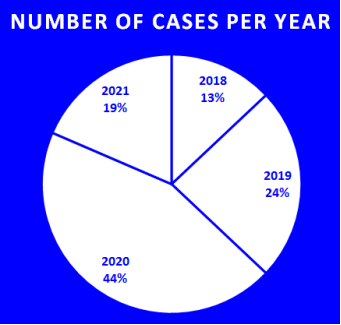
In this study, 54 patients were operated on by an oral and maxillofacial surgeon in an operating room setting, prior to undergoing invasive cardiothoracic surgery, between 2018 and 2021 (Figure 1). These patients were selected based upon co-morbidities that grouped them into either an ASA III or ASA IV physical classification (Figure 2). Furthermore, patients were then screened to have dental maladies that required the extraction of multiple teeth prior to undergoing cardiothoracic surgery, which typically took place within 24-48 hours after the extraction procedure. A total of 54 patients that fit this research profile were then selected for the purposes of this study. The duration of the procedures performed were segregated into 3 series: 1) under 30 minutes, 2) 30 to 60 minutes, and e) greater than 60 minutes. Time was registered from the beginning of anesthetic administration and concluded when the surgical procedure and anesthetic administration was concluded (Figure 3). The anesthetic and adjunctive agents utilized during the procedures were those commonly utilized in anesthesia practice, both on an inpatient and outpatient basis, either alone or in combination (Figure 4).
Figure 1. Depicts the number of cases were completed in each year during the time frame of 2018 to 2021.
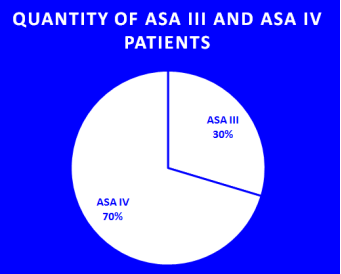
Figure 2. Depicts the comparison between how many patients were categorized as ASA III and how many patients were categorized as ASA IV.
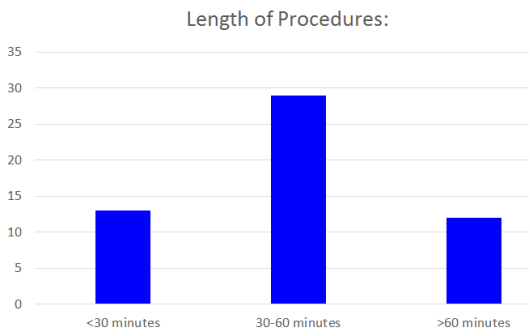
Figure 3. Depicts the varying lengths of procedures within the 54 cases and the breakdown of how many were grouped into each of the 3 allotted time series [less than 30 minutes, 30-60 minutes, and greater than 60 minutes].
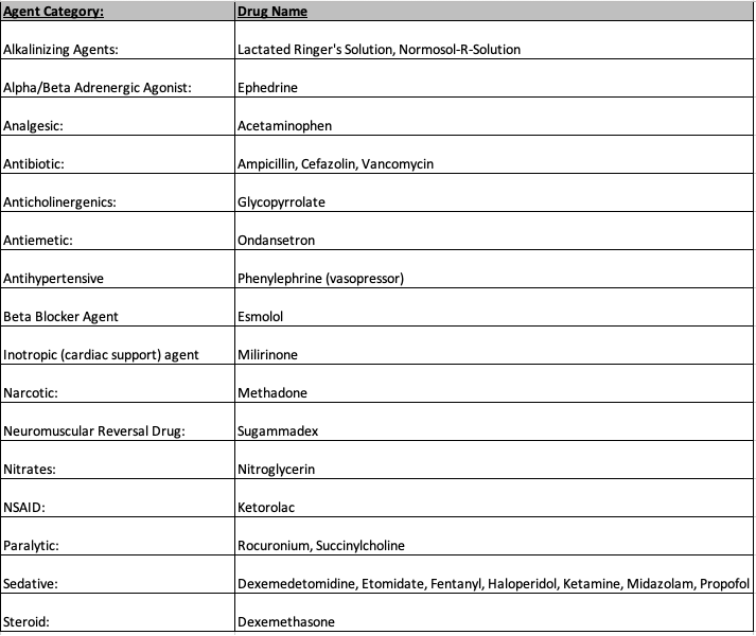
Figure 4. Lists of Agents used in conjunction for procedures within this study to achieve deep sedation/general anesthesia, regardless of length of procedure or ASA Physical Classification.
3. Results
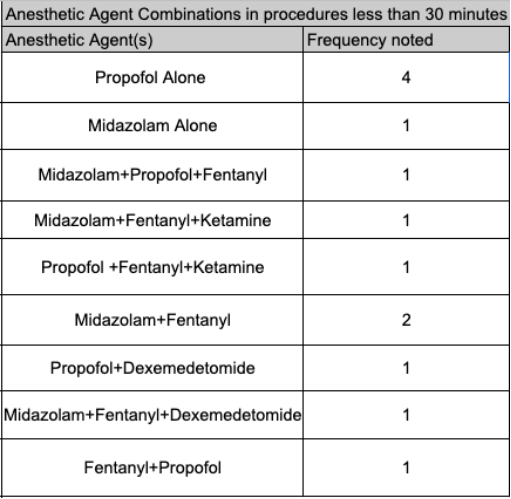
The results are illustrated in combination for each specific series of time parameter, and are outlined below. For the less than 30 minutes group, the various sedative/anesthetic medications were utilized alone or in combination, with propofol being the most commonly utilized single agent, and midazolam and fentanyl were the most commonly utilized combination of agents (Figure 5).
Figure 5. Agents utilized for each of the ‘less than 30 minutes’ series.
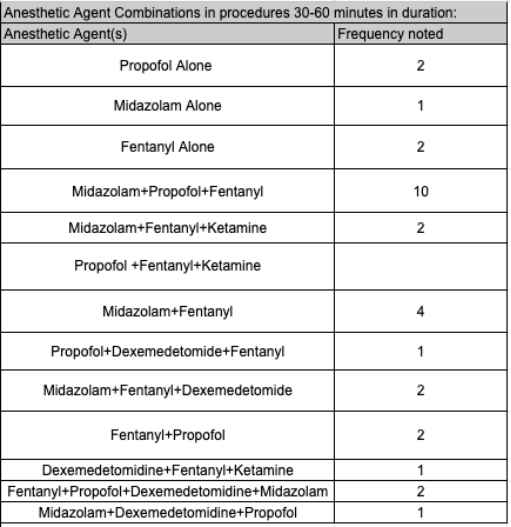
For the 30-to-60-minute series, the most commonly utilized agents are listed below, either alone or in combination. The agents utilized alone were propofol, fentanyl, and midazolam, and these were utilized for only five of the selected cases. For the remaining 25 cases, various combinations of agents were utilized, with the most common having been the combination of midazolam, fentanyl and propofol, followed by the combination of midazolam and fentanyl. (Figure 6).
Figure 6. Agents utilized for the ’30-60 minutes’ series.
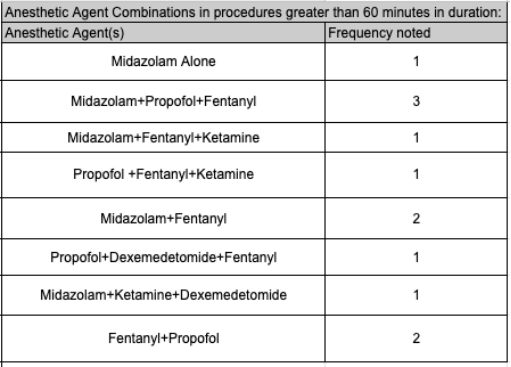
In the series where the case duration was greater than 60 minutes, the most common combinations of agents utilized some combination of midazolam, fentanyl, and propofol (Figure 7).
Figure 7. Agents utilized for the ‘Greater than 60 minutes’ series.
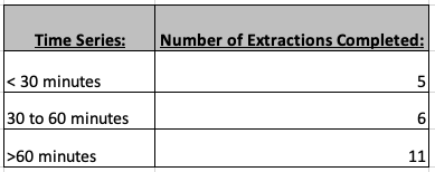
Additionally, the average number of extractions completed per case in each time series is outlined below (Figure 8).
Figure 8. Depiction of the average amount of extractions per time series.
4. Discussion
Because of the overlapping disciplines in both medicine and dentistry that characterize the contemporary practice of oral and maxillofacial surgery, surgeons can safely and appropriately manage the needs of their patients, balancing between outpatient and inpatient settings . When dental providers are consulted to evaluate patients who require extractions prior to planned invasive cardiothoracic procedures, including cardiac valve replacement, many of these patients are not suitable for treatment in an office-based setting, and require multiple extractions in an operating room setting . When the surgeon or anesthesia provider is confronted with a patient who requires deep sedation or general anesthesia in this setting, they have a wide range of pharmacologic agents from which to choose, as seen in Figure 4. This study addressed with the most commonly used sedative/anesthetic agents for dental extraction procedures, either alone or in combination, in an operating room setting, and include fentanyl, dexmedetomidine, ketamine, propofol, midazolam, and remimazolam . Interestingly, it has been shown that dexmedetomidine is a comparable alternative to midazolam for oral surgical care, either in an operating room or outpatient setting . Though these agents are widely used and studied, the combinations of these agents that are often used for ASAIII/IV patients undergoing preoperative dental extractions prior to cardiothoracic surgery are not found in the literature.
When comparing the 54 patients in this study, all were either ASA III or ASA IV, and were then separated further into three different groups according to duration of the case: 1) less than 30 minutes, 2) 30-60 minutes, and 3) greater than 60 minutes. It is important to note that in this study, the only dental procedures that were analyzed involved the extraction of multiple teeth. The purpose of dividing patients into these case-time groups was to further analyze what combination(s) of sedative agents were likely to have been utilized when duration of time was a factor.
Examination of the data from the less than 30 minute case-time group (Figure 5), propofol used alone was the common sedative utilized, followed by a combination of midazolam and fentanyl. For patients in the 30-60 minute case-time group, a combination of three sedative agents: midazolam, propofol, and fentanyl was utilized more commonly than any other drug combination. The second closest combination was midazolam and fentanyl. Dexmedetomidine was observed to have been utilized in conjunction with either propofol, ketamine, fentanyl and midazolam in several cases. It is interesting to note that dexmedetomidine is being utilized more frequently among practicing oral and maxillofacial surgeons, along with an appropriate local anesthetic regimen, for oral surgical procedures . As expected, for shorter procedures only one anesthetic agent was utilized, and when procedures were of a longer duration, a combination of agents was utilized. The combination of sedative agents that were used in the greater than 60 minutes case-time group that were utilized most frequently was midazolam, propofol, and fentanyl, followed by a combination of midazolam and fentanyl and a combination of fentanyl and propofol. These case-time series suggest that when the surgeon is presented with a potentially longer case-time, a combination midazolam, fentanyl and propofol is the combination of choice.
The results of this study underscore the efficacy and safety of parental sedation and general anesthesia with the pharmacologic agents described above when administered slowly and in recommended doses by appropriate anesthesia providers . Additionally, in contemporary practice, either in an operating room or outpatient setting, dexmedetomidine is a useful adjunctive sedative agent with analgesic and anxiolytic properties, minimal respiratory depression, and prompt emergence .
5. Conclusion
Deep sedation or general anesthesia, along with appropriate local anesthesia, is a common theme in the contemporary practice of oral and maxillofacial surgery. Patients who require the extractions can range from a healthy ASA I patient status classification to a severely medically-compromised patient with an ASA IV patient status classification. In this study, which examined 54 patients who were either ASA III and IV patients, and who required multiple extractions in an operating room setting prior to planned cardiothoracic surgery, combinations of agents were utilized in almost all cases. In those cases that were of shorter duration, wherein only one sedative agent was utilized, propofol was the most commonly utilized agent. For procedures with a duration of 30-60 minutes and greater than 60 minutes, the combination of midazolam, fentanyl, and propofol was the most commonly utilized. It is of interest to note that this combination of agents is the one that many oral surgeons utilize in outpatient office settings. The results of this study suggest that, regardless of setting, the combinations of agents as described above should serve as an outline for planning and delivery of deep sedation or general anesthesia for the removal of multiple teeth for patients who require invasive cardiothoracic surgery. This study should serve to draw attention opportunities for further research with medically compromised patients as described, and will serve to enhance patient outcomes.
Abbreviations

ASA

American Society of Anesthesiology

ADA

American Dental Association

BMI

Body Mass Index

MI

Myocardial Infarction

CVA

Cerebrovascular Accident

TIA

Transient Ischemia Attack

CAD

Coronary Artery Disease

CABG

Coronary Artery Bypass Grage

MACCE

Major Adverse Cardiac and Cerebrovascular Events

Conflicts of Interest
The authors declare no conflicts of interest.
References
[1] Flynn, D. N., et al. Review of the ASA Physical Status Classification: Comment. Anesthesiology 136, 865-866 (2022).
[2] Hupp, J. R., Ellis, E., Tucker, M. R. Contemporary Oral and Maxillofacial Surgery, Seventh Edition (Elsevier, 2019).
[3] Weaver, J. M. ADA’s sedation and anesthesia guidelines pass: will they be universally accepted? Anesthesia Progress 55, 1 (2008).
[4] Livhits, M., et al. Risk of Surgery Following Recent Myocardial Infarction. Annals of Surgery (2011) 253.857.
[5] Glance, L. G., et al. Time Since Prior NSTEMI and Major Adverse Cardiovascular and Cerebrovascular Events after Noncardiac Surgery. JAMA Surg 160, 45-54 (2025).
[6] Lieblich, S., Providing Anesthesia in the Oral and Maxillofacial Surgery Office, Where We Are Now, and a Look Ahead. J Oral Maxillofac Surg 76, 917-925 (2018).
[7] Samulak-Zielinska, R., et al. Dental treatment of post-myocardial infarction patients: A review of the literature. Dent Med Probl 56, 291-298 (2019).
[8] Ganzberg, S. I., et al. Anesthesia for office-based oral and maxillofacial surgery. Dent Clin North Am. 43 (1999).
[9] American Association of Oral and Maxillofacial Surgeons. White Paper on Office-Based Anesthesia Provided by the Oral and Maxillofacial Surgeon (2022).
[10] Hassan, H., et al. Efficacy and cost analysis of intravenous conscious sedation for long oral surgery procedures. British Journal of Oral and Maxillofacial Surgery 62, 523-538 (2024).
[11] Cangemi, C. F. Jr. Administration of general anesthesia for outpatient orthognathic surgical procedures. J Oral Maxillofac Surg 69, 798-807 (2011).
[12] Mishra, N., et al. Sedation in oral and maxillofacial day care surgery: A comparative study between intravenous dexmedetomidine and midazolam. National Journal of Maxillofacial Surgery 7, 178-185 (2016).
[13] Singh, V., et al. Dexmedetomidine as an Additive to Local Anesthesia: A Step to Development in Dentistry. J Oral Maxillofac Surg 76 (2018).
[14] Dianne, R. A., et al. Comparing efficacy and safety of four intravenous sedation regimens in dental outpatients. Journal of the American Dental Association 6, 740-752 (2001).
[15] Jason, A. S., et al. Comparison of the Efficacy of Midazolam and Dexmedetomidine As Sedative Agents in Third Molar Surgery. Cureus 15 (2023).
Cite This Article
  • APA Style

    Traub, D. J., Harris, E. (2025). Deep Sedation/General Anesthesia Regimens for the ASA III and IV Dental Patients in an Operating Room Setting. International Journal of Anesthesia and Clinical Medicine, 13(2), 114-119. https://doi.org/10.11648/j.ijacm.20251302.20

    Copy | Download

    ACS Style

    Traub, D. J.; Harris, E. Deep Sedation/General Anesthesia Regimens for the ASA III and IV Dental Patients in an Operating Room Setting. Int. J. Anesth. Clin. Med. 2025, 13(2), 114-119. doi: 10.11648/j.ijacm.20251302.20

    Copy | Download

    AMA Style

    Traub DJ, Harris E. Deep Sedation/General Anesthesia Regimens for the ASA III and IV Dental Patients in an Operating Room Setting. Int J Anesth Clin Med. 2025;13(2):114-119. doi: 10.11648/j.ijacm.20251302.20

    Copy | Download

  • @article{10.11648/j.ijacm.20251302.20,
      author = {Daniel Joseph Traub and Ethan Harris},
      title = {Deep Sedation/General Anesthesia Regimens for the ASA III and IV Dental Patients in an Operating Room Setting
    },
      journal = {International Journal of Anesthesia and Clinical Medicine},
      volume = {13},
      number = {2},
      pages = {114-119},
      doi = {10.11648/j.ijacm.20251302.20},
      url = {https://doi.org/10.11648/j.ijacm.20251302.20},
      eprint = {https://article.sciencepublishinggroup.com/pdf/10.11648.j.ijacm.20251302.20},
      abstract = {Introduction: For a patient to be deemed as American Society of Anesthesiologists (ASA) type III or IV, that patient must have a severe systemic disease that may constitute a constant threat to their daily life. Examples of these medical conditions include, but are not limited to, myocardial infarction, cerebral vascular accident, sepsis, and end-stage renal disease. For many of these patients, removal of teeth is required prior to invasive cardiothoracic procedures, in order to prevent or reduce the risk of infection, including bacterial endocarditis. The American Dental Association (ADA), along with the ASA recommend the use of deep sedation/general anesthesia in these instances. Objective: Presently, there is no leading literature comparing different anesthetic regimens that are the most commonly used and most effective for these procedures involving exodontia. The purpose of this report is to examine the most common sedative/general anesthetic regimens utilized for dentoalveolar surgery in an operating room setting, for ASA III and IV patients who require invasive cardiothoracic surgery. Methods: In this study, 54 ASA III and IV patients who required cardiothoracic surgery, underwent sedation or general anesthesia for extraction of teeth in an operating room setting 1 to 2 days prior to undergoing invasive cardiothoracic surgery. These exodontia procedures were grouped into 3 case series: under 30 minutes, 30-60 minutes, and greater than 60 minutes in duration. Conclusions: In all 3 series, midazolam, propofol, dexmedetomidine, and fentanyl were the most frequently used agents, alone or in combination. This demonstrates the fact that the sedative/anesthetic regimens utilized for dentoalveolar surgery in the operating room are similar to those utilized in outpatient oral and maxillofacial surgery settings.
    },
     year = {2025}
    }
    

    Copy | Download

  • TY  - JOUR
    T1  - Deep Sedation/General Anesthesia Regimens for the ASA III and IV Dental Patients in an Operating Room Setting
    
    AU  - Daniel Joseph Traub
    AU  - Ethan Harris
    Y1  - 2025/10/30
    PY  - 2025
    N1  - https://doi.org/10.11648/j.ijacm.20251302.20
    DO  - 10.11648/j.ijacm.20251302.20
    T2  - International Journal of Anesthesia and Clinical Medicine
    JF  - International Journal of Anesthesia and Clinical Medicine
    JO  - International Journal of Anesthesia and Clinical Medicine
    SP  - 114
    EP  - 119
    PB  - Science Publishing Group
    SN  - 2997-2698
    UR  - https://doi.org/10.11648/j.ijacm.20251302.20
    AB  - Introduction: For a patient to be deemed as American Society of Anesthesiologists (ASA) type III or IV, that patient must have a severe systemic disease that may constitute a constant threat to their daily life. Examples of these medical conditions include, but are not limited to, myocardial infarction, cerebral vascular accident, sepsis, and end-stage renal disease. For many of these patients, removal of teeth is required prior to invasive cardiothoracic procedures, in order to prevent or reduce the risk of infection, including bacterial endocarditis. The American Dental Association (ADA), along with the ASA recommend the use of deep sedation/general anesthesia in these instances. Objective: Presently, there is no leading literature comparing different anesthetic regimens that are the most commonly used and most effective for these procedures involving exodontia. The purpose of this report is to examine the most common sedative/general anesthetic regimens utilized for dentoalveolar surgery in an operating room setting, for ASA III and IV patients who require invasive cardiothoracic surgery. Methods: In this study, 54 ASA III and IV patients who required cardiothoracic surgery, underwent sedation or general anesthesia for extraction of teeth in an operating room setting 1 to 2 days prior to undergoing invasive cardiothoracic surgery. These exodontia procedures were grouped into 3 case series: under 30 minutes, 30-60 minutes, and greater than 60 minutes in duration. Conclusions: In all 3 series, midazolam, propofol, dexmedetomidine, and fentanyl were the most frequently used agents, alone or in combination. This demonstrates the fact that the sedative/anesthetic regimens utilized for dentoalveolar surgery in the operating room are similar to those utilized in outpatient oral and maxillofacial surgery settings.
    
    VL  - 13
    IS  - 2
    ER  - 

    Copy | Download

Author Information